Event
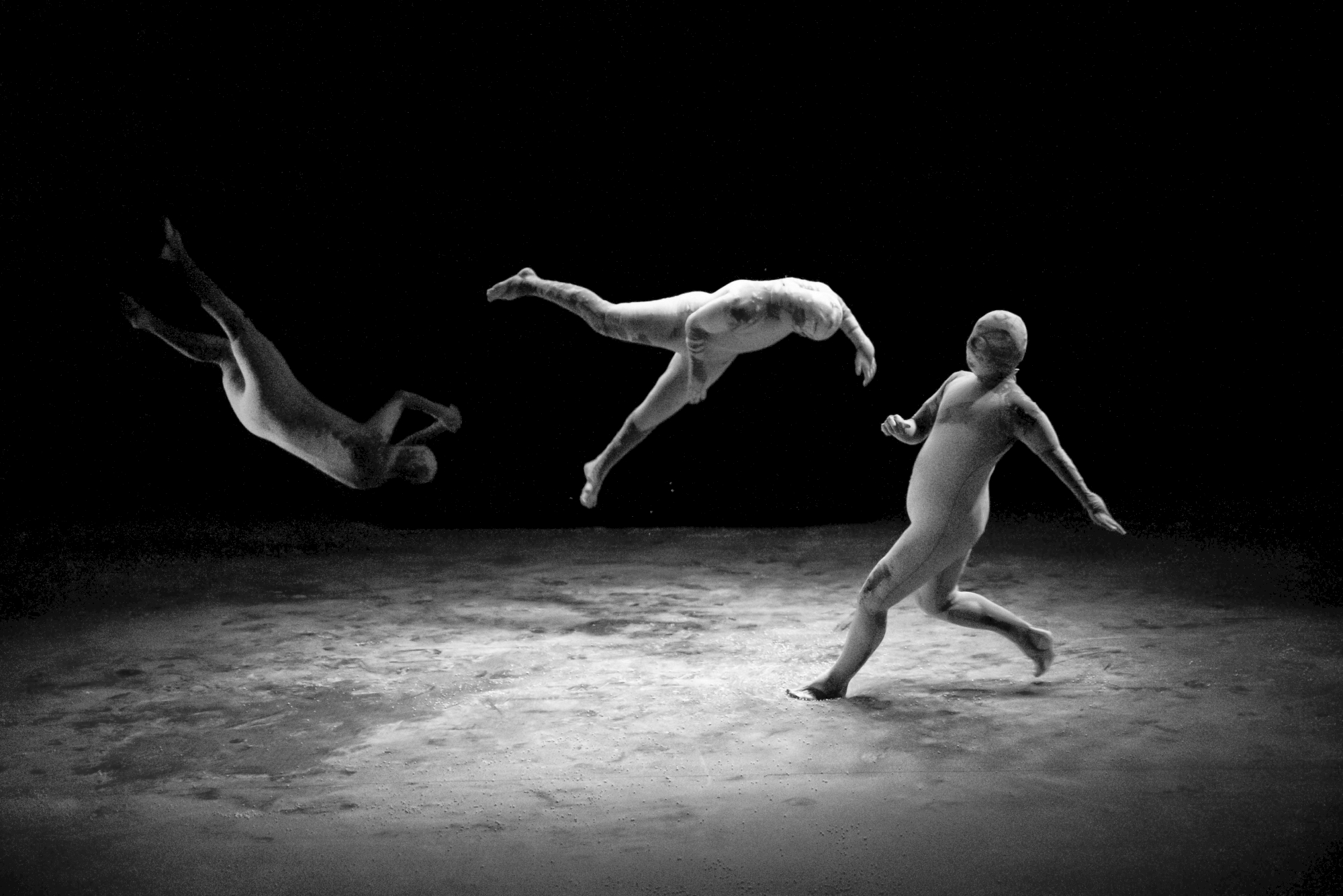
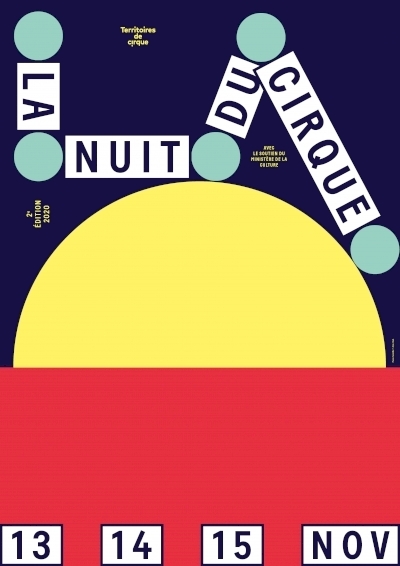
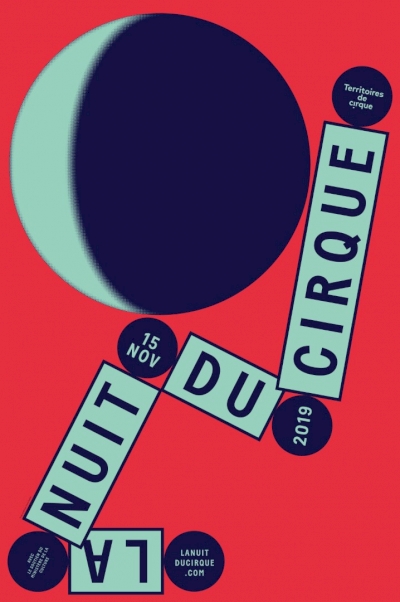
Created in 2019, La Nuit du Cirque is a major cultural event that celebrates all facets of the contemporary circus across France and around the world.
This unifying and festive moment takes place every autumn in order to share the vitality and diversity of this resolutely popular and demanding art form. La Nuit du Cirque is dedicated to promoting the social and environmental commitments of the contemporary circus as well as its intercultural and intergenerational dimensions.
It is a snapshot of the diversity of circus creation at a given moment, that tells the story of an art form in permanent evolution and fully open to the major issues that are being debated in society.
La Nuit du Cirque is an international event to promote contemporary circus, initiated and organized by Territoires de Cirque with the support of the French Ministry of Culture, in collaboration with the Institut français and assistance from Circostrada, the FFEC - French Federation of Circus Schools, the FEDEC - European Federation of Professional Circus Schools, the Grand CIEL network, ProCirque (Switzerland), BUZZ and Forum Neuer Zirkus (Germany), Circuscentrum (Belgium) and the Czech Association of Contemporary Circus (Czech Republic).
Interview with
Delphine Poueymidanet, secretary general of the Territoires de Cirque
& Gaëlle Lecareux, director of Théâtre ONYX, a nationally accredited theatre in Saint-Herblain in western France and vice-president of Territoires de Cirque
Organised by the Territoires de Cirque, La Nuit du Cirque continues to thrive despite the challenging situation facing the performing arts sector, which has been weakened by significant budget cuts. This year, the 7th edition of the event will once again showcase the vibrant creative circus landscape in France and internationally. Delphine Poueymidanet and Gaëlle Lecareux, how do you explain this success?
Delphine Poueymidanet: When launching this year’s call for participation, we at the Territoires de Cirque were unsure whether we would see the same enthusiasm among venues as in previous years. Because the circus receives less public financing than other artistic disciplines that have longer and therefore stronger relationships with funding institutions, the cuts have had a bigger impact. However, the tremendous vitality of our discipline is undeniable. Attendance at shows has been excellent, even in the aftermath of Covid when other performing arts were struggling to regain their audiences. The scale of this 7th edition of La Nuit du Cirque is a testament to this powerful spirit and proves that venues are committed to supporting the creative circus. I also believe the success is a reflection of how cultural venues appreciate the community-based organisation of La Nuit du Cirque, which sets it apart from similar events (such as the Nuit Blanche, the Fête de la Musique, the Nuit des Musées…) that are directly overseen by the Ministry of Culture.
Gaëlle Lecareux: From my perspective, the fact that La Nuit du Cirque is supported by the Territoires de Cirque has played a big part in my desire to participate, going all the way back to the first edition in 2019. The freedom that the Territoires de Cirque offers the venues that take part in the three-day event is extremely valuable and rewarding. When I delved into the wide-ranging programme for this new edition of La Nuit du Cirque, I saw a sophisticated approach to the event: the balance between new creations and performances by schools and amateur groups strikes me as ideal. This balance is reminiscent of the circus itself, where there seems to be a healthy porosity between amateur and professional practices.
Many participants programme a show or a workshop for La Nuit du Cirque, but the ONYX – Théâtre de Saint-Herblain is one of the partner venues that has taken a significant editorial role. Gaëlle Lecareux, as the theatre’s director, what is the reason for this approach and what will be the theme of your 2025 event?
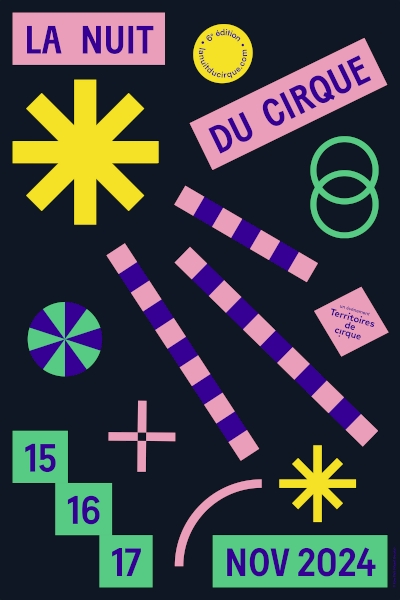
G.L.: For me, as well as for many other directors of participating venues, it was clear from the outset that La Nuit du Cirque had to be a significant event at the ONYX. Although I programme circus throughout the season, La Nuit du Cirque is an opportunity to embrace new perspectives and offer audiences an in-depth exploration of this fascinating branch of the performing arts. The creative circus is still shrouded in preconceptions that associate it with pure entertainment and improvisation. By hosting shows and events that create genuine connections between artists and audiences, these stereotypes can be overcome. This is important, particularly given the art form’s popular appeal – in the positive sense of the term, which should not be feared. This is something we sorely need at a time when democracy is under threat in our societies. After organising a 100% all-women’s La Nuit du Cirque in 2023 and a dual event in association with Le Plongeoir national circus centre in Le Mans last year, this year ONYX will give artists a platform to stand up for their beliefs with Nuit Debout. Our theatre is located in the Pays-de-la-Loire region and there have been terrible budget cuts to culture and all public services. We couldn’t ignore this. We will have two days of performances, from a cocktail hour event on November 15 to a brunch show on November 16. The performances we have scheduled – Drache Nationale and Mousse by the Compagnie Anoraks, Doliprane by Sandrine Juglair and Marcos Caramés-Blanco, Courbatures by Galapiat Cirque – address the current situation in their own way. Throughout the weekend, we’ll be able to get together and discuss ideas and issues over a drink or around a brazier. In other words, the tone of this edition of La Nuit du Cirque will be resolutely political.
The ONYX was one of the first general-interest performance venues to embrace La Nuit du Cirque and has always offered a unique programme. This trend is continuing and the latest edition will feature a significant number of events held outside the traditional circus network while venues that regularly welcome circus performances are using La Nuit du Cirque as an opportunity to break from their usual programming habits.
D.P.: The Territoires de Cirque team is delighted to see this trend, which can be interpreted as a sign of growing awareness of the artistic qualities of the contemporary circus and its accessibility and ability to bring people together. While each venue gives La Nuit du Cirque a distinct identity, this year has seen an increase in commissions and this has resulted in some truly unique events. For example, the Carré Magique national circus centre in Brittany asked the AMA company to create an artistic experience involving a contortion-themed breakfast. The Théâtre du Blavet in Inzinzac-Lochrist on the northwest coast of France solicited Mathieu Despoisse and his team to organise the circus section of a Roller Dance Cirque event. Another example is Le Plongeoir national circus centre in Le Mans, which always seeks to bring people together in new ways; this year, they are structuring their event around the La Baraka circus collective and the Les Poors rock group.
G.L.: With these events and the many others that make up La Nuit du Cirque, I see a form of creative freedom that I find joyful and extremely welcome. While the creative circus may have avoided festive forms of events in its early days because they were associated with the traditional circus in the public imagination, the initiatives mentioned by Delphine demonstrate a shift in this regard. This does not mean that artistic standards are being compromised, these are simply new and interesting ways of combining entertainment and creativity.
Earlier, you mentioned the artistic creations being presented at ONYX and how they use the circus as a vehicle to discuss the violence and issues that are shaping our current era. Is this one of the broad themes that runs through this year’s version of La Nuit du Cirque?
D.P.: Absolutely. The programme features shows that are firmly rooted in our present time and many feature a strong autobiographical component. This reflects a desire to explain what it means to create, what it is like for an artist to live in a world where everything is broken and no solutions seem to work. Édouard Peurichard is one of the performers who has chosen this approach. He will present two of his shows at the Le Prato national circus centre in Lille. There is also the Cirque Trottola’s show Strano, which can be seen at La Verrerie national circus centre in Alès. Environmental concerns are also at the heart of this edition, with, for example, Le Carré Magique’s revival of Camille Boitel’s emblematic show L’Immédiat and its reflection on the need for less. We should also mention La Conf’ by the La Sensitive company. The fact that artists are openly addressing these issues is a sign of how worrying they are for the sector. Further proof is the participation of nine out of the 14 national circus centres in a carbon assessment study commissioned by the Ministry of Culture to establish a carbon benchmark.
G.L. We should note that, as the carbon assessment study shows, the idea that the circus consumes more energy than other artistic disciplines, particularly when performed in a big top, is a cliché that still needs to be dispelled.
La Nuit du Cirque also provides another opportunity for the Territoires de Cirque to promote the creation and distribution of the circus arts.
D.P.: The Territoires de Cirque has a production fund that was launched in 2023 to support work by the Ukrainian circus company Inshi. The fund has since evolved and now relies on an innovative mechanism that invites members of the network to share their expertise. It promotes a comprehensive approach to projects that encompasses everything from production to distribution. Three of the four projects supported in 2024 are on the La Nuit de Cirque programme: Ignis by the Collectif Sismique, Biographies by the Ea Eo company, and Aspirator by the Happés company. One of the two projects selected for support in the small format category in 2025 is also being featured: In Difference by Marica Marinoni and Jef Everaert. This year, the 14 national circus centres came together to launch a new initiative, Les Grands Plateaux du Cirque, to support large-scale works that are struggling in the current economic climate; the idea is to bring together the networks of the national drama centres and national theatres to ensure these works can be programmed. Finally, it’s important to note the tremendous international development of La Nuit du Cirque. In countries such as Belgium, Switzerland, Germany, and, most recently, the Czech Republic, organisations similar to the Territoires de Cirque are coordinating increasingly large-scale events for La Nuit du Cirque. Burkina Faso is also home to a very dynamic event focused on circus in the community. The free spirit of the Nuit du Cirque is spreading and that is a source of tremendous joy and pride.
Interview by Anaïs Heluin
Secretary General of Territoires de Cirque
Editorial director and coordinator of La Nuit du Cirque
Delphine Poueymidanet
Assisted by
Tania Reyes and Arthur Sarron
Graphic design
Magali Brueder, Aéro Club
Website (design and code)
Salomé Macquet
National media relations
bureau nomade
Carine Mangou et Estelle Laurentin
Translation
Jeremy Mercer
Journalist
Anaïs Héluin